How do you remember a character you keep forgetting? In this video, Eon tries a clever trick: instead of just copying 四 (sì), the Chinese character for four, over and over, he turns it into a picture. He opens an AI image maker and starts asking it to draw the shape of the character — but getting a good picture turns out to be a hunt, full of funny wrong guesses before the right idea finally clicks.
If you've ever stared at a shape and thought "what does that even look like?", this lesson is for you.
四 is four — and it has a shape worth looking at
The character for four is 四. Look closely: it's a box, and inside the box there are two little marks that hang down — almost like two legs. That's exactly what Eon notices first. He and his grown-up go back and forth: "No, a two leg." "Two leg." "It's like a TV — we got a TV with two legs, and inside, two legs."
That's the heart of a mnemonic (say it "nuh-MON-ik") — a memory trick where you connect something hard to remember (a character) to something easy to picture (a TV with legs, or a window). Once 四 looks like a real thing in your head, it's much harder to forget. Numbers in Chinese build up fast, so a strong picture for four pays off every time you count.
The first pictures were... pretty scary
The first thing Eon learns is that the very first try is almost never the best one. When the AI starts drawing, the results are a mess. "This is really scary." "Maybe not a sadman's face." One picture is so blurry he can't even tell what it is: "Is that a lady? Nope, it's pixelated. It needs regenerating."
So Eon does something smart — he doesn't just accept the bad picture. He changes his instructions. He asks: should it be pixelated (blocky, like an old video game) or realistic (smooth, like a photo)? He decides he wants realistic, then tries "add a tiny little bit realistic" to nudge it. Some come out "very bad," some "better," and a few are just plain weird: "That is an animal!"
The lesson here isn't the pictures — it's the method. When something doesn't work, you don't quit. You change one thing and try again.
Changing your imagination until it fits
The best moment is when Eon realizes the problem might be his own idea, not the computer's. "I think we need to change our imagination a little bit," he says. He'd been picturing the shape as a windshield of a car — but that wasn't quite right. The proportions felt off: "Maybe it's too long. Look how short that is."
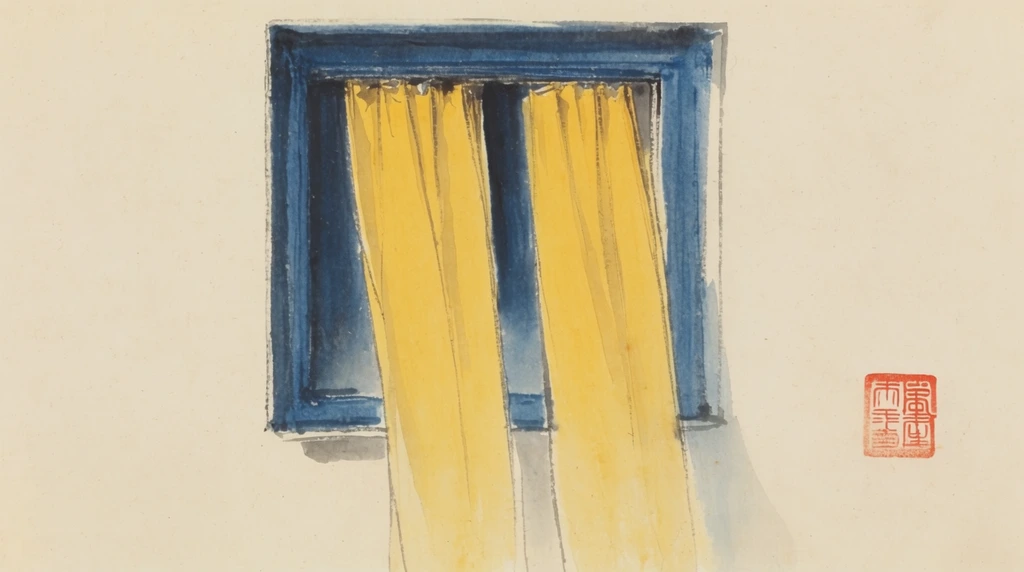
Then comes the breakthrough. He hunts for the word — "It's like this clothes, what's it called again?" — and lands on curtain. Curtains! A window with two curtains hanging down inside the frame. Suddenly the shape of 四 makes sense: the box is the window, and the two marks inside are two curtains. "This is like a two-curtain, realistic... I kind of like this, like a curtain of the house. Yeah, this is pretty good. I like it."
That's two skills at once: stretching his English vocabulary to find the exact word (windshield → curtain → window), and staying flexible enough to swap out an idea that wasn't working for one that was.
Try it
Pick a number you sometimes mix up — maybe 四 (four) like Eon, or another character such as 二 (èr, two) or 八 (bā, eight). Then:
- Look hard at the shape. What real object does it remind you of? A face? A TV? A window? There's no wrong answer.
- Draw it. On paper, sketch the character — then add a tiny doodle that turns it into your object (give 四 some curtains!).
- Say it out loud as you draw: "四, sì, four — a window with two curtains."
- If your first idea feels wrong, change it. Just like Eon went from "windshield" to "curtain," let yourself swap ideas until one clicks.
Tomorrow, see if the picture helped. When you spot 四, does the window pop into your head? If it does, you've built your own memory trick — the exact same way Eon did.